
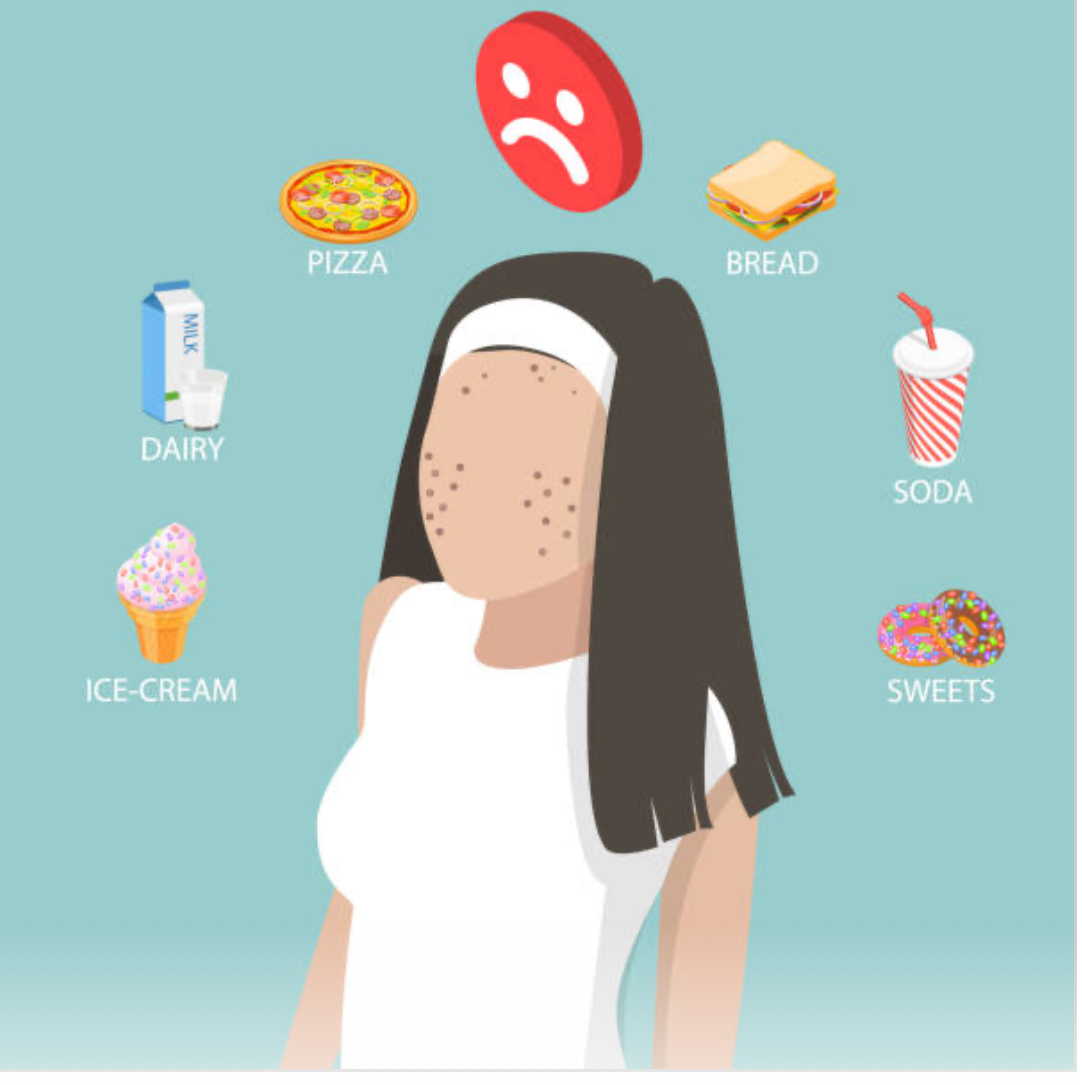

Can Your Diet Really Affect Acne? A Scientific Look at What We Eat and How It Shows on Our Skin
Acne is a common skin condition that goes far beyond teenage breakouts. It affects adults too, and for many, it’s not just a hormonal issue, what we eat may be playing a bigger role than we think. While the debate about food and acne is ongoing, recent research brings more clarity. This article explores how diet may influence acne, both positively and negatively — using insights from three key scientific studies.
- The Link Between Diet and Acne: What the Science Says
A 2022 systematic review titled “Diet and acne: A systematic review” analyzed existing studies to evaluate the connection between food choices and acne. It found strong associations between acne and:
• High glycemic index (GI) foods such as white bread, sugary cereals, and sweetened drinks.
• Dairy products, especially skimmed milk.
• Western-style diets high in refined carbs, sugar, and fats.
The review also highlighted potential protective foods, including:
• Omega-3-rich sources (like fatty fish)
• Low-GI foods, fruits, vegetables, and foods rich in antioxidants and fiber
These foods appear to reduce inflammation and oxidative stress — two known contributors to acne.
• Source: “Diet and acne: A systematic review,” Journal of Dermatological Investigation, 2022. DOI: 10.1016/j.jdin.2022.02.012
- How Diet Affects Treatment Outcomes
It’s not just about preventing acne, your diet might also influence how well your skin responds to treatment. A study published in Drugs in Dermatology reviewed dietary patterns and their effects on both the severity of acne and the efficacy of its treatments.
The research found that:
• Diets high in refined carbohydrates and dairy can worsen acne or limit treatment response.
• Nutrients such as zinc, vitamin A, and omega-3 fatty acids may help enhance treatment outcomes.
• Probiotics may also support healthier skin by improving gut health, which has an emerging link to skin inflammation.
This suggests a combined approach: while topical or oral medications are essential, they might work even better when paired with skin-friendly nutrition.
• Source: “Effects of Diet on Acne and Its Response to Treatment,” American Journal of Clinical Dermatology, 2020. DOI: 10.1007/s40257-020-00542-y
- Real-Life Evidence: Diet and Acne in a Large Population
The NutriNet-Santé study, one of the largest dietary cohort studies in Europe, looked at the link between adult acne and everyday food habits. Researchers followed thousands of adults and found:
• Adults with acne had higher consumption of milk, sugary drinks, and fatty/sweet foods.
• Those with lower acne rates tended to eat more fruits, vegetables, and whole foods.
Importantly, this study confirmed that dietary behavior not just isolated foods — may influence acne risk. This supports a broader lifestyle approach rather than focusing on cutting out individual items.
• Source: “Association Between Adult Acne and Dietary Behaviors: Findings From the NutriNet-Santé Prospective Cohort Study,” JAMA Dermatology, 2020. DOI: 10.1001/jamadermatol.2020.1602
What Does This Mean for You?
Here are some science-backed takeaways if you’re dealing with acne:
Foods to Limit:
• High-GI carbs (white bread, sugary snacks, sodas)
• Dairy products, especially skim milk
• Processed and fast foods
Foods to Include:
• Low-GI, whole-grain carbs
• Omega-3 sources (salmon, walnuts, flaxseeds)
• Zinc-rich foods (pumpkin seeds, lentils)
• Antioxidant-rich fruits and vegetables
• Probiotic foods (yogurt, kefir, fermented vegetables)
⸻
Conclusion: Can Diet Really Help Your Skin?
Based on current evidence, the answer seems to be yes — at least for some people. While food isn’t the sole cause of acne, dietary patterns can influence how your skin behaves and how it responds to treatment. If you’re struggling with persistent acne, it’s worth examining your eating habits alongside your skincare routine. Small changes in your diet could have a big impact on your skin health.