
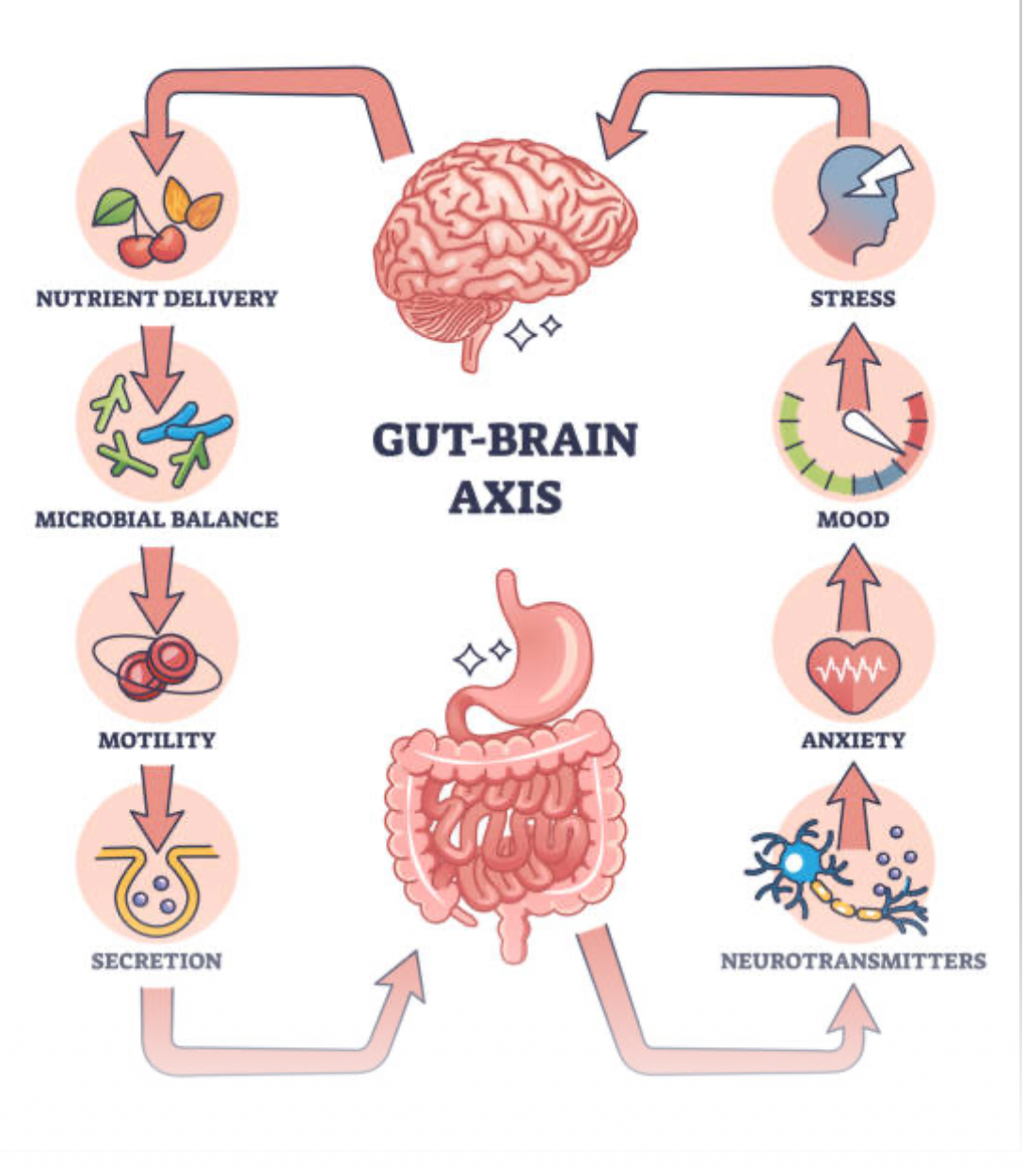

The gut microbiota influences the brain through several mechanisms:
1. Neurotransmitter Production
Certain gut bacteria produce neurotransmitters such as serotonin, dopamine, and gamma-aminobutyric acid (GABA), which regulate mood and emotional well-being (Clarke et al., 2013). Approximately 90% of serotonin, a key neurotransmitter for mood regulation, is produced in the gut (O’Mahony et al., 2015).
2. Inflammation and Immune Modulation
An imbalance in gut microbiota (dysbiosis) can lead to chronic inflammation, which has been linked to depression, anxiety, and neurodegenerative diseases such as Alzheimer’s and Parkinson’s disease (Goyal et al., 2021).
3. Short-Chain Fatty Acids (SCFAs)
SCFAs, such as butyrate and acetate, are produced by gut bacteria during the fermentation of dietary fiber. These compounds play a vital role in maintaining the integrity of the blood-brain barrier and regulating neuroinflammation (Silva et al., 2020).
Impact of Diet on the Gut-Brain Axis
Diet plays a fundamental role in shaping gut microbiota and influencing brain health. Several dietary components have been shown to impact the gut-brain axis:
• Probiotics and Prebiotics: Probiotics (live beneficial bacteria) and prebiotics (compounds that promote beneficial bacteria growth) support gut health and may reduce symptoms of anxiety and depression (Mayer et al., 2022).
• Fiber-Rich Diet: A diet high in fiber promotes the growth of SCFA-producing bacteria, which contribute to cognitive function and emotional well-being (Silva et al., 2020).
• Polyphenols: Found in fruits, vegetables, and tea, polyphenols have neuroprotective and anti-inflammatory properties that benefit brain health (Goyal et al., 2021).
The Gut-Brain Axis and Mental Health Disorders
Increasing evidence suggests that gut health is strongly linked to various mental health disorders, including:
• Depression and Anxiety: Studies indicate that individuals with depression often have an altered gut microbiome composition, with reduced microbial diversity and increased pro-inflammatory bacteria (Clarke et al., 2013).
• Autism Spectrum Disorder (ASD): Gut dysbiosis has been observed in individuals with ASD, leading to increased gastrointestinal issues and neurodevelopmental changes (Mayer et al., 2022).
• Neurodegenerative Diseases: Alterations in gut microbiota have been implicated in Alzheimer’s and Parkinson’s disease, with research suggesting that gut-targeted therapies may help in managing symptoms (Goyal et al., 2021).
Conclusion
The gut-brain axis plays a fundamental role in regulating mental and neurological health. By maintaining a balanced gut microbiota through diet, probiotics, and a healthy lifestyle, individuals can positively influence brain function and emotional well-being. Future research into gut-based interventions may offer promising treatments for mental health disorders and neurodegenerative diseases.
References
Clarke, G., Grenham, S., Scully, P., Fitzgerald, P., Moloney, R. D., Shanahan, F., & Cryan, J. F. (2013). The microbiome–gut–brain axis during early life regulates the hippocampal serotonergic system in a sex-dependent manner. Molecular Psychiatry, 18(6), 666-673. https://doi.org/10.1038/mp.2012.77
Cryan, J. F., O’Riordan, K. J., Sandhu, K., Peterson, V., & Dinan, T. G. (2019). The gut microbiome in neurological disorders. The Lancet Neurology, 18(2), 136-148. https://doi.org/10.1016/S1474-4422(18)30313-3
Goyal, D., Ali, S. A., & Singh, R. K. (2021). Emerging role of gut microbiota in modulation of neuroinflammation and neurodegeneration with emphasis on Alzheimer’s disease. Progress in Neurobiology, 205, 102127. https://doi.org/10.1016/j.pneurobio.2021.102127
Mayer, E. A., Nance, K., & Chen, S. (2022). The gut–brain axis: From motility to mood. Nature Reviews Gastroenterology & Hepatology, 19(6), 391-405. https://doi.org/10.1038/s41575-022-00611-1
O’Mahony, S. M., Clarke, G., Borre, Y. E., Dinan, T. G., & Cryan, J. F. (2015). Serotonin, tryptophan metabolism and the brain–gut–microbiome axis. Behavioural Brain Research, 277, 32-48. https://doi.org/10.1016/j.bbr.2014.07.027
Silva, Y. P., Bernardi, A., & Frozza, R. L. (2020). The role of short-chain fatty acids from gut microbiota in gut-brain communication. Frontiers in Endocrinology, 11, 25. https://doi.org/10.3389/fendo.2020.00025